
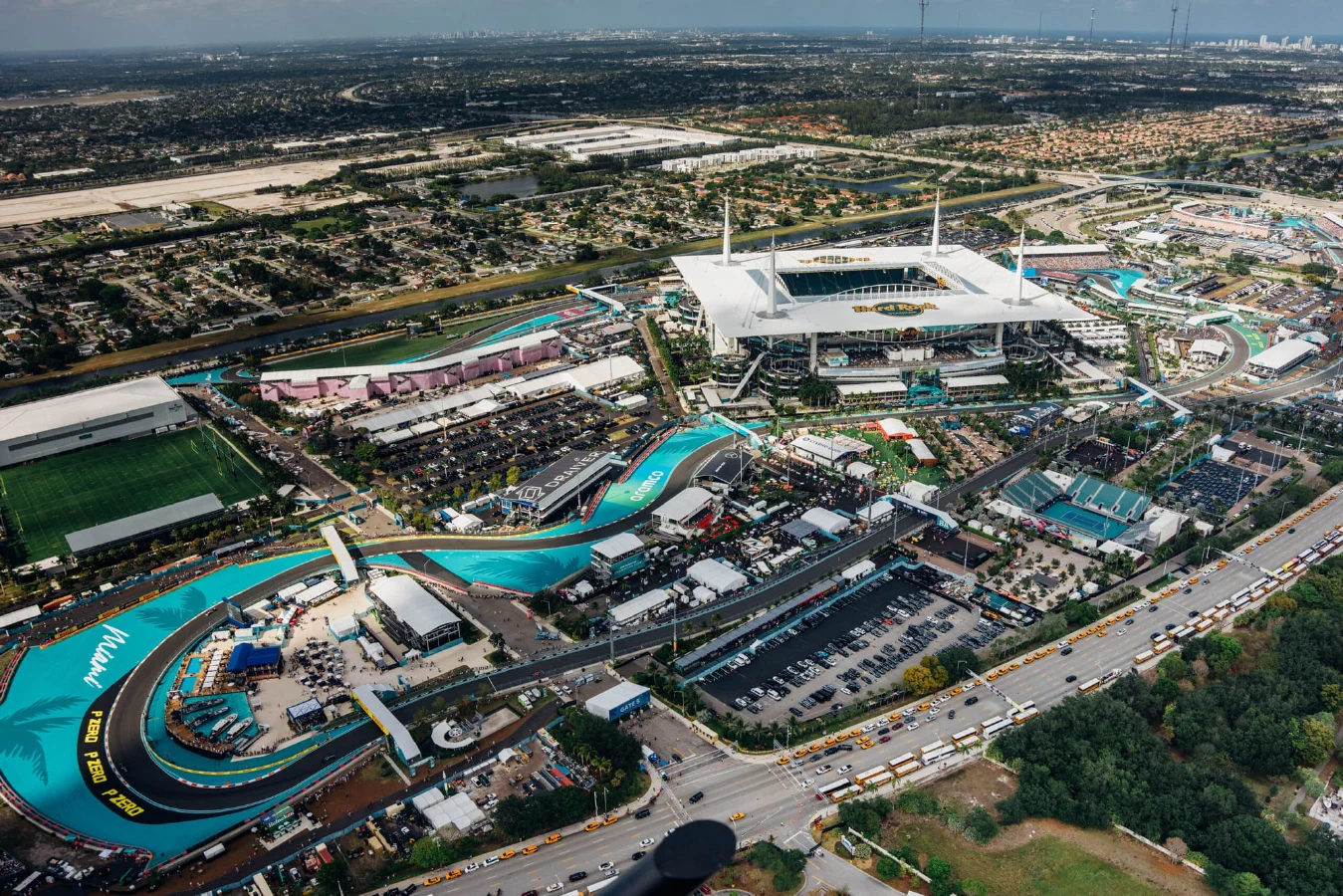
Miami Secures the Longest Contract on the F1 Calendar
The Miami Grand Prix has secured the largest contract extension of any circuit currently on the Formula 1 calendar. Announced in the build-up to the race weekend, the agreement will keep the event on the schedule until 2041 — ten years beyond its original 2031 deadline.
Formula 1 CEO Stefano Domenicali described the deal as a major strategic step for the championship’s continued growth in the United States.
“In just three years, the Miami Grand Prix has established itself as one of the most important and spectacular events on our calendar.”
Domenicali also emphasised the significance of the long-term commitment.
“Extending this agreement until 2041 is a strategic milestone of enormous importance, which strengthens our presence in America and consolidates the ever-deepening bond with our fan base there.”
Tom Garfinkel, managing partner of the Formula 1 Miami Grand Prix, echoed the sentiment.
“Securing a 10-year extension with Formula 1 through 2041 is an extraordinary milestone for all of us at South Florida Motorsports and a testament to the work of our team.”
A Calendar in Transition
The announcement arrives during a period of significant change for the Formula 1 calendar. With the championship currently running a record 24-race season, several traditional venues are approaching the end of their existing contracts.
New venues are already being introduced. Spain’s upcoming Madrid street circuit — often referred to as The Madring — is set to replace the Circuit de Barcelona-Catalunya after its final contracted race next year.
Meanwhile, Spa-Francorchamps will move to a rotational model, hosting the Belgian Grand Prix only in odd-numbered years until the end of its current agreement.
While some historic venues face uncertain futures, others appear far more secure.
Which Circuits Are Safe?
Certain races remain deeply embedded in Formula 1’s identity. Events such as Monaco, Canada, and Silverstone are widely considered cornerstone fixtures — either because of their heritage or their importance within key markets.
Recent investment can also provide protection. The Hungaroring has undergone extensive redevelopment, while Monza has seen major infrastructure upgrades in recent years. Both moves suggest long-term intent to remain part of the championship.
That said, history shows nothing is guaranteed. The French Grand Prix has already disappeared from the calendar once again, demonstrating how quickly circumstances can change.
Why Formula 1 Loves Street Circuits
Formula 1’s increasing interest in street circuits has become one of the defining trends of the modern calendar.
There are several reasons for this shift.
City-based races naturally generate a different atmosphere. The track sits at the centre of the action rather than miles outside a population hub. Transport links are already established, and the event integrates more easily with the surrounding city.
Street circuits also tend to produce unpredictable racing. Public-road surfaces can be slippery and inconsistent, while concrete barriers leave little room for error. The result is often tighter racing, higher drama, and a greater chance of incidents.
The Jeddah Corniche Circuit, for example, has delivered spectacular races since joining the calendar.
The Environmental Question
However, the growth of street circuits raises broader questions about sustainability.
Formula 1 is currently evaluating the potential return of naturally aspirated V10 engines running on sustainable fuels — a move that would dramatically alter the sound and character of the sport.
But some drivers have pointed out that the environmental impact of the race cars themselves is only part of the equation.
Williams driver Alex Albon recently suggested that the majority of Formula 1’s environmental footprint comes from the logistics required to move the championship around the world.
The series has already attempted to improve this by organising the calendar into more geographically logical groupings, reducing long-haul travel where possible.
Yet temporary street circuits present their own challenge. Building large-scale infrastructure in city centres — only to dismantle it again days later — raises questions about efficiency and sustainability.
A Different Vision for the Calendar?
Many European countries already possess world-class permanent racing facilities. Spain, Italy, Belgium, and France all host circuits capable of staging Formula 1.
That raises a simple question: why build more temporary tracks when existing venues could still play a role?
A rotating calendar featuring different permanent circuits could potentially create variety while reducing the need for temporary city builds.
For now, though, Formula 1’s direction is clear. Major metropolitan events like Miami represent the commercial and promotional future of the sport — and with a contract running until 2041, the Miami Grand Prix will be part of that future for decades to come.